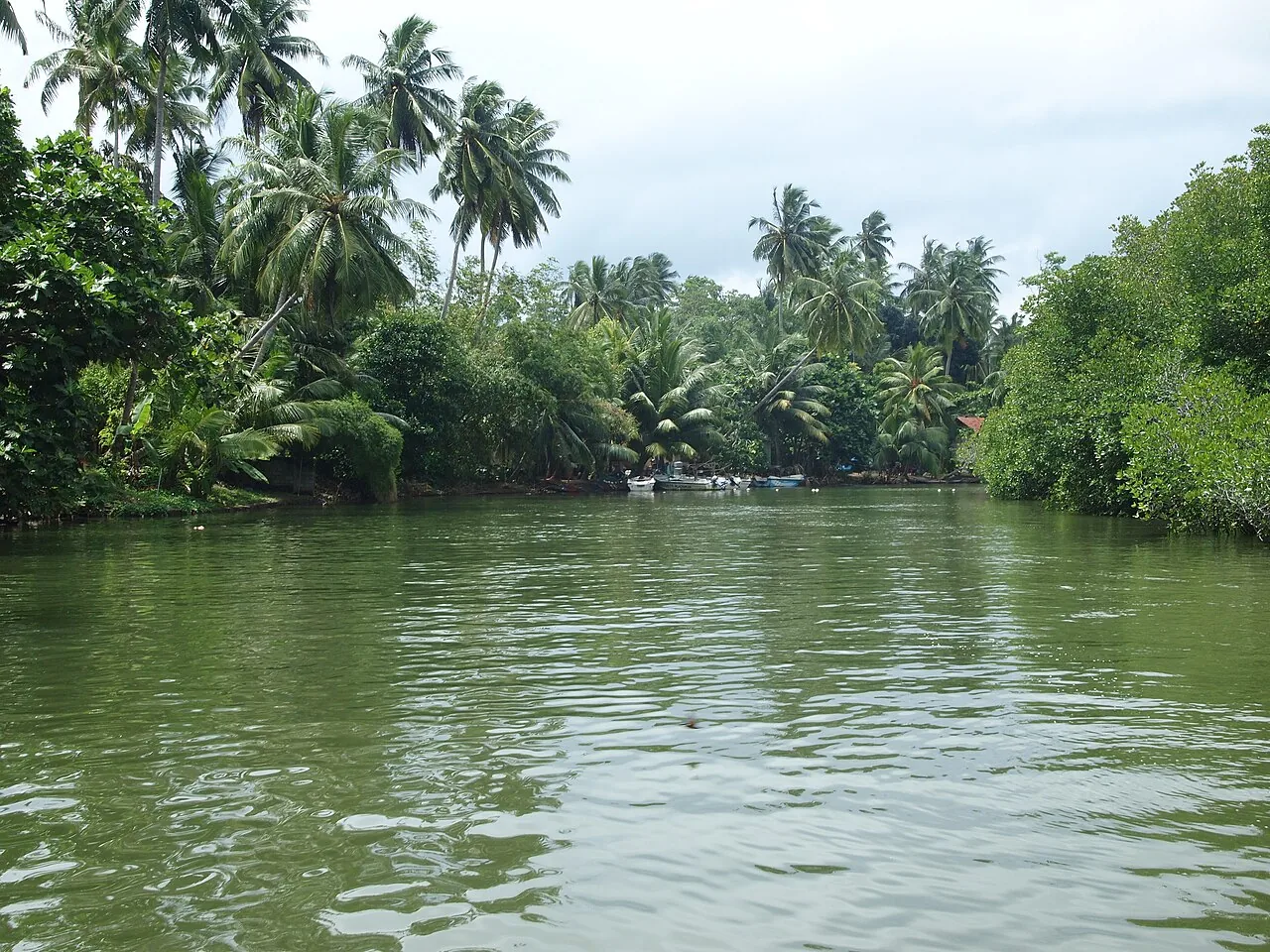
The island behind the name Cobra Island
The historical link between Naiduwa and ‘Cobra Island’ is documented in the Ramsar Information Sheet’s land-tenure section. That record identifies Naiduwa specifically; it is not another name for all the islands of Madu Ganga.
The name does not make a wildlife encounter predictable. Plan to enjoy the island landscape and any animals observed at a respectful distance. Do not expect a snake display or ask anyone to capture, handle or disturb an animal for a photograph.
What the conservation records tell us
IUCN Sri Lanka’s 2002 biodiversity assessment included Naiduwa in its mid-estuary sampling group, characterised by moderate salinity. The group, which also included Miraladuwa and Muwanduwa, was associated with mixed vegetation involving Rhizophora, Bruguiera and Excoecaria. This is a historical survey classification, rather than a current inventory of every plant on the island.
The 2003 Ramsar Information Sheet subsequently reported that the Department of Wildlife Conservation had gazetted Naiduwa as a sanctuary. This dated record establishes an important conservation chapter. It should not be used by itself to describe today’s precise legal boundary or to imply permission to land.
Reading Naiduwa’s history carefully
The strongest evidence reviewed here concerns the island’s ecology and conservation. These documents do not establish its earliest settlement, an ancient founder or a complete account of its residents over time. A useful history of Naiduwa begins with what can be checked, while allowing room for further local and archival research.
If your guide shares an island story, ask whether it comes from a written record or local recollection. Oral accounts can add meaning to a journey, but they should be introduced as traditions rather than assigned an unsupported date.
Seeing Naiduwa on a Madu River safari
Mention Naiduwa when arranging your trip and ask the crew to identify it if the chosen route passes nearby. Confirm whether your interest can be met from the boat. An island appearing in a visitor guide does not mean it has a public landing place, a walking trail or scheduled visitor facilities.
Keep your visit quiet, bring your litter back, and leave roots and shoreline vegetation untouched. Ask before taking close photographs of people or homes. A rewarding island visit can be a careful look from the water, with time to notice the shoreline rather than rush to the next stop.