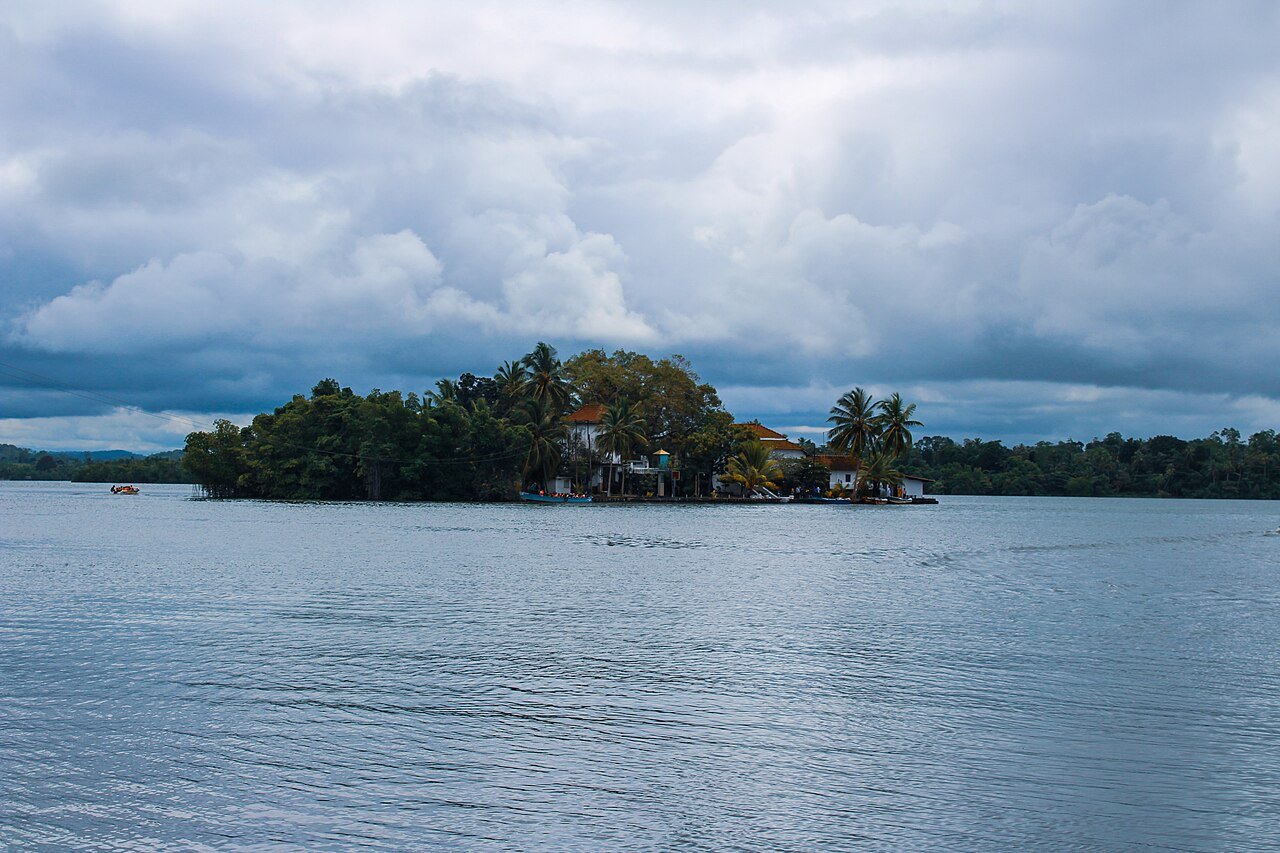
What is documented about Kothduwa's heritage?
ICOMOS Sri Lanka's Galle heritage inventory describes Kothduwa's image house and monks' residence as significant island buildings. It associates their construction with Mudliar Rajapakshe of Maha Kappina Walawwa and identifies Dutch architectural influence in the image house's columns, terracotta flooring and timber roof structure.
The inventory also describes a raised terrace approached by steps from the riverbank and a courtyard residence with an inner veranda. These details invite you to look beyond the island scenery: the buildings reflect coastal Sri Lankan architectural exchange as well as Buddhist religious use. The inventory is a heritage record; it does not make the temple a UNESCO World Heritage Site.
The Bodhi tree and Tooth Relic traditions
Maduganga's 2003 Ramsar Information Sheet records a tradition, attributed to the Bodhiwansha, linking Kothduwa's sacred tree to the Dethis Maha Bodhi. It separately records a chronicle tradition that the Tooth Relic was sheltered here during a period of conflict with the Portuguese.
These are religious and literary traditions, rather than a securely established construction date for every surviving building. Published retellings give conflicting dates and royal names, so this guide does not present one disputed chronology as proven history. The temple remains an active religious place, and the meaning it holds for worshippers matters alongside its historical questions.
Visiting an active island temple
The temple asks visitors to dress modestly and maintain respectful quiet. Bring a light covering for shoulders and knees, follow signs and instructions about footwear, and give worshippers room around shrines and the Bodhi tree. Ask before photographing people, ceremonies or restricted areas.
Boat access is part of the experience, but a river cruise and an island landing are different activities. Read the selected package's inclusions before booking. A passing view does not automatically include time inside the temple, a guided religious explanation or participation in ceremonies. Allow the visit to follow the temple's daily life.
Plan Kothduwa as part of your Madu River safari
Kothduwa works especially well for travellers who want to understand the people of Madu Ganga as well as its mangroves. Pair the temple's cultural setting with the river's other island stories, including cinnamon processing, and keep enough time to enjoy the boat journey between stops.
Compare the current Safari Packages for the route, planned landings and duration, then book the option that suits your group. If travelling with someone who finds steps or boat transfers difficult, check the landing arrangements before choosing a temple visit; island access should not be assumed to be step-free.
Kothduwa Temple questions
Is Kothduwa a sightseeing stop or a working temple? It is an active Buddhist temple. Visitors should treat worship and community use as the priority.
Is every Madu River boat safari the same? No. Check the package's stated stops, particularly whether Kothduwa is viewed from the water or includes a landing. Use Safari Packages for current inclusions and booking details.