Why cinnamon belongs in the Madu River story
Cinnamon cultivation forms part of the landscape and livelihoods around Balapitiya. The official Southern tourism guide connects the area's plantations with its spice heritage, while Maduganga's Ramsar documentation records cinnamon cultivation among local economic activities.
That relationship gives the stop its context. The river is a place where people live and work, with gardens, homes and religious sites among the waterways. A demonstration is an introduction to a living craft, rather than evidence that every visitor venue has the same age, ownership or family history.
Ceylon cinnamon and the island's wider spice history
Sri Lanka's Department of Cinnamon Development describes a long international trade in the island's cinnamon. Colonial demand later reshaped production: Dutch administrators developed more systematic cultivation, including experiments around Colombo during Governor Falck's administration in the eighteenth century.
The department's account places those developments in Sri Lanka's wider history. It does not establish that a particular Madu River demonstration island was a Dutch plantation, the birthplace of cinnamon cultivation or an ancient trading port. Keeping that distinction clear lets the local experience illustrate the national spice story without inventing a history for the venue.
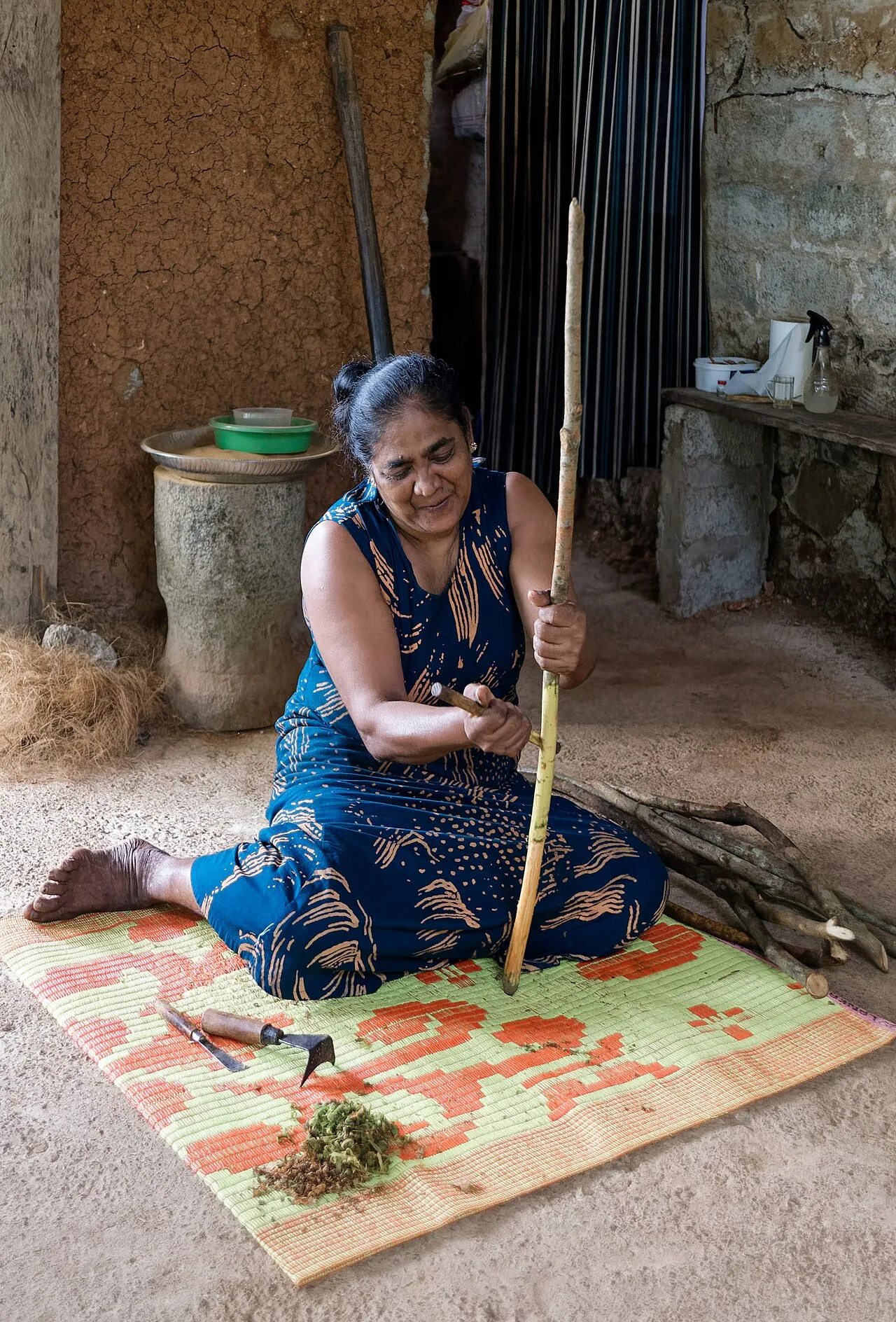
How a cinnamon quill is made
Ceylon cinnamon comes from the inner bark of Cinnamomum verum, also known as Cinnamomum zeylanicum. Sri Lanka's Export Development Board describes a sequence of skilled preparation: the outer surface is removed, the inner bark is loosened, and thin pieces are carefully peeled away.
The pieces are assembled together to create the layered quills and then dried. Watching this work helps explain why a quill is more than a simple curled strip of bark. Ask the demonstrator which stage you are seeing, how the bark is handled and how drying changes its appearance. A brief demonstration may show selected stages; it need not reproduce the whole production cycle.
What to look for during a cinnamon stop
Give the craft your attention before reaching for a camera. A useful visit explains the material, the tools and the work involved. Ask permission before photographing the host or their home, and follow any instructions around cutting tools and working surfaces.
Products may be offered for sale, but a demonstration and a purchase are separate choices. Check any item and its label before buying, and ask what it contains if you have allergies or sensitivities. Do not interpret a souvenir product or a sales explanation as medical advice. This guide makes no promises of tastings, oil making or a particular shop.
Book a safari with the right island stops
Use Safari Packages to compare the planned cinnamon stop with the route's other experiences, such as Kothduwa Temple and the mangrove waterways. Look at the whole itinerary and duration, rather than assuming that every tour advertising Cinnamon Island offers the same visit.
Travelling with children or someone with limited mobility? Check how the group will get from boat to demonstration area. Wear practical footwear for the journey, protect belongings from splashes and allow the host to set the pace. Book through the package page for current inclusions and prices; this guide focuses on the place and its craft.